“`html
If you have ever dreamed of mastering that effortlessly elegant brunch staple, this Classic Eggs Benedict Recipe is exactly what you need. It combines perfectly toasted English muffins, tender Canadian bacon, delicately poached eggs, and a silky homemade hollandaise sauce that will make your taste buds sing. Every bite is a harmonious dance of creamy, savory, and tangy flavors that turns an ordinary morning into an unforgettable experience. Trust me, once you try this recipe, Classic Eggs Benedict will become your go-to dish for impressing family or simply treating yourself to something special.

Ingredients You’ll Need
These ingredients are simple yet all play a crucial role in creating the texture, flavor, and visual appeal that make this dish so beloved. From the richness of egg yolks in the hollandaise to the slight tang of freshly squeezed lemon juice, each item adds its own magic.
- 3 large Egg Yolks: Use fresh eggs for the best flavor and silky sauce texture.
- 1/2 cup Unsalted Butter: Melt gently to create that rich, creamy hollandaise sauce.
- 1 tablespoon Lemon Juice: Fresh-squeezed lemon juice brightens the sauce with just the right acidity.
- Salt: Adjust to taste to balance the richness.
- 1/4 teaspoon Cayenne Pepper: Adds a subtle warmth, optional but highly recommended.
- 2 pieces English Muffins: Toasted until golden for the perfect crunchy base.
- 4 slices Canadian Bacon: Classic choice for this recipe, but you can swap with ham or crispy bacon if you prefer.
- 4 large Eggs: Fresh eggs poached to runny perfection make all the difference.
- 1 tablespoon White Vinegar: Helps the poached eggs keep their shape.
- 2 tablespoons Chives or Dill: Fresh herbs for a lovely flavor boost and pretty garnish.
- Cayenne Pepper: Optional garnish to give your dish a little kick and vibrant color.
How to Make Classic Eggs Benedict Recipe
Step 1: Prepare the Hollandaise Sauce
Start by gently whisking the egg yolks, lemon juice, and a pinch of salt in a medium saucepan over low heat. Slowly pour in the melted butter while continuously whisking to combine everything into a smooth, creamy sauce. The key here is patience — temper the heat and whisk steadily to avoid scrambling the eggs. Once finished, cover and keep the sauce warm as you move to the next steps.
Step 2: Simmer Water for Poaching
Fill a pot with water and add the white vinegar, which helps the egg whites stay together when poaching. Bring the water up to a gentle simmer over medium heat — too hot and the eggs can break apart, too cool and they won’t cook properly. This perfectly controlled simmer sets the stage for beautifully poached eggs.
Step 3: Cook the Canadian Bacon
Heat a large skillet over medium heat and add the slices of Canadian bacon. Sauté them for 3 to 4 minutes until they’re warmed through and have a nice golden brown edge. This step builds a savory foundation and adds a lovely texture contrast to the poached eggs.
Step 4: Toast the English Muffins
In the same skillet, melt a bit of butter to infuse extra flavor and toast the English muffin halves cut side down for 2 to 3 minutes. The goal is a golden, slightly crispy surface that holds up well under the toppings and offers a satisfying crunch in every bite.
Step 5: Poach the Eggs
Carefully crack each egg into the gently simmering water. Poach them for about 3 to 4 minutes, aiming for firm whites and soft, runny yolks — the hallmark of a great Classic Eggs Benedict Recipe. Remove the eggs with a slotted spoon and drain briefly on a paper towel to avoid excess water when plating.
Step 6: Assemble the Classic Eggs Benedict
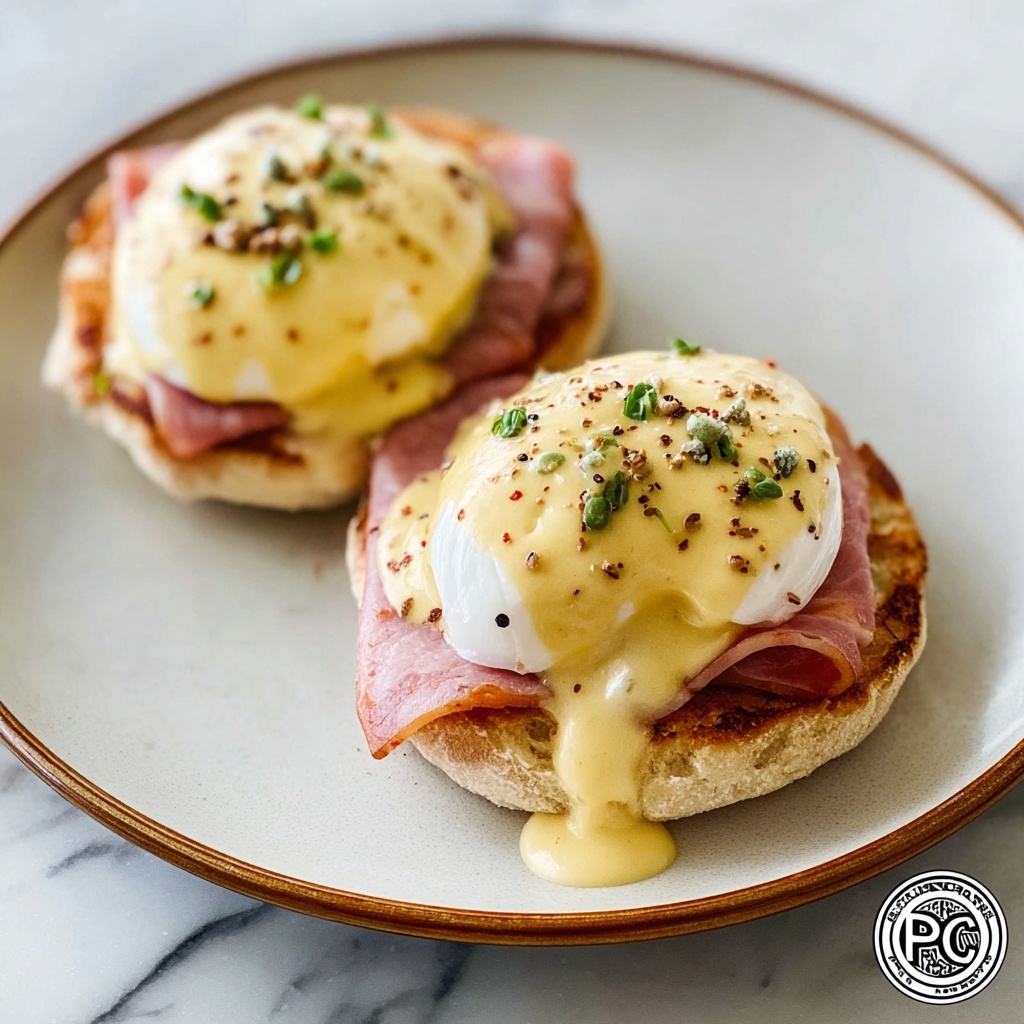
Layer each toasted English muffin half with a slice of the golden Canadian bacon. Place a perfectly poached egg on top, then generously drizzle with the velvety hollandaise sauce. Finish with a sprinkle of fresh chives or dill and a dash of cayenne pepper if you like a little extra punch. Serve immediately for the best experience.
How to Serve Classic Eggs Benedict Recipe
Garnishes
Fresh herbs like chives or dill not only brighten the plate visually but add a subtle herbaceous note that complements the richness. A light dusting of cayenne pepper provides a gentle heat and gorgeous color contrast that makes your dish pop.
Side Dishes
To round out your Classic Eggs Benedict meal, consider light and fresh sides like arugula salad with lemon vinaigrette or crispy roasted potatoes. These options balance the creamy, rich components of the dish and elevate the entire brunch spread.
Creative Ways to Present
For a modern twist, try serving your Classic Eggs Benedict on a bed of sautéed spinach or swap out the English muffins for toasted baguette slices. You can even experiment by adding smoked salmon in place of Canadian bacon for an elegant variation that impresses guests.
Make Ahead and Storage
Storing Leftovers
Store any leftover components separately in airtight containers in the refrigerator for 3 to 4 days. Keep hollandaise sauce covered tightly to prevent a skin from forming, and remember, the texture of poached eggs is best enjoyed fresh, so try to consume leftovers promptly.
Freezing
Because hollandaise sauce and poached eggs don’t freeze well, it’s best to avoid freezing leftovers of this Classic Eggs Benedict Recipe. Instead, prepare and enjoy this dish fresh for optimum taste and texture.
Reheating
For the hollandaise, gently reheat it in a warm water bath or over very low heat while whisking constantly to restore its creamy texture. Reheat Canadian bacon in a skillet until warmed through and toast fresh English muffins if needed. Poached eggs, however, should be eaten fresh, as reheating compromises their delicate structure.
FAQs
Can I use a blender to make the hollandaise sauce?
Absolutely! Using a blender can simplify the process and help emulsify the sauce quickly. Just add the egg yolks, lemon juice, and melted butter slowly while blending. Be cautious to keep the sauce warm but not overheated.
What if I don’t have Canadian bacon? Can I substitute it?
Yes! Ham or crispy bacon are great alternatives that still provide the savory flavor you want in this Classic Eggs Benedict Recipe. Just adjust cooking time to crispiness preference.
How do I know when poached eggs are perfectly cooked?
The whites should be firm and set without any translucent spots, while the yolk stays soft and runny. Poaching for 3 to 4 minutes at a gentle simmer typically achieves this balance.
Is it okay to prepare any part of this recipe ahead of time?
You can prepare the hollandaise sauce ahead and keep it warm, and toast the English muffins just before serving. Poaching eggs is best done right before assembling for the freshest, most delightful texture.
Can this recipe be doubled for a larger group?
Definitely! Just scale the ingredients accordingly and use a larger saucepan for the hollandaise sauce. Ensure your poaching water pot is big enough to cook multiple eggs comfortably without crowding.
Final Thoughts
This Classic Eggs Benedict Recipe is a wonderful way to elevate your breakfast or brunch with a touch of elegance and incredible flavor. It feels like a special occasion every time you make it, and the homemade hollandaise alone is worth the effort. Give this recipe a try—you’ll be amazed at how rewarding and delicious mastering this classic can be!
“`
Print
Classic Eggs Benedict Recipe
- Prep Time: 10 minutes
- Cook Time: 20 minutes
- Total Time: 30 minutes
- Yield: 2 servings
- Category: Breakfast
- Method: Stovetop
- Cuisine: American
Description
This classic Eggs Benedict recipe brings a luxurious touch to your morning with perfectly poached eggs, savory Canadian bacon, toasted English muffins, and rich, creamy Hollandaise sauce. Ideal for a brunch treat, it balances tangy lemon, smooth butter, and delicate spices to create a breakfast that’s elegant and satisfying.
Ingredients
Hollandaise Sauce
- 3 large Egg Yolks (Use fresh eggs for best flavor.)
- 1/2 cup Unsalted Butter (Melted gently.)
- 1 tablespoon Lemon Juice (Fresh-squeezed preferred.)
- Salt to taste
- 1/4 teaspoon Cayenne Pepper (Optional)
Eggs and Accompaniments
- 4 large Eggs (Fresh for best poaching results.)
- 1 tablespoon White Vinegar (For poaching water.)
- 2 pieces English Muffins (Split and toasted)
- 4 slices Canadian Bacon (Can substitute ham or crispy bacon)
- 2 tablespoons Fresh Chives or Dill (For garnish)
- Cayenne Pepper to taste (Optional for garnish)
Instructions
- Prepare Hollandaise Sauce: In a medium saucepan over low heat, combine the 3 egg yolks, 1 tablespoon lemon juice, and a pinch of salt. Slowly whisk in the gently melted 1/2 cup unsalted butter until the sauce thickens into a smooth and creamy consistency. Keep warm by covering the sauce.
- Simmer Water for Poaching Eggs: Fill a pot with water and add 1 tablespoon white vinegar. Bring it to a gentle simmer over medium heat, ensuring it doesn’t boil, to prepare for poaching.
- Sauté Canadian Bacon: Heat a large skillet over medium heat. Add 4 slices of Canadian bacon and cook for about 3-4 minutes until heated through and golden brown, then remove from heat.
- Toast English Muffins: In the same skillet, melt a small amount of butter. Place the halved English muffins cut side down and toast until golden brown, about 2-3 minutes.
- Poach Eggs: Carefully crack each of the 4 eggs into the simmering water. Poach for 3-4 minutes or until the egg whites are set but the yolks remain runny. Remove eggs carefully with a slotted spoon.
- Assemble the Dish: On each toasted muffin half, layer one slice of Canadian bacon, top with a poached egg, then generously drizzle with the Hollandaise sauce. Garnish with fresh chives or dill and a sprinkle of cayenne pepper if desired. Serve immediately for best flavor and texture.
Notes
- Use fresh eggs for perfect poaching results with runny yolks.
- Keep Hollandaise sauce warm but avoid overheating to prevent curdling.
- White vinegar in poaching water helps the egg whites firm up quickly.
- Optional cayenne pepper adds a subtle heat to the sauce and garnish.
- Substitute Canadian bacon with ham or crispy bacon as preferred.